

















































































































































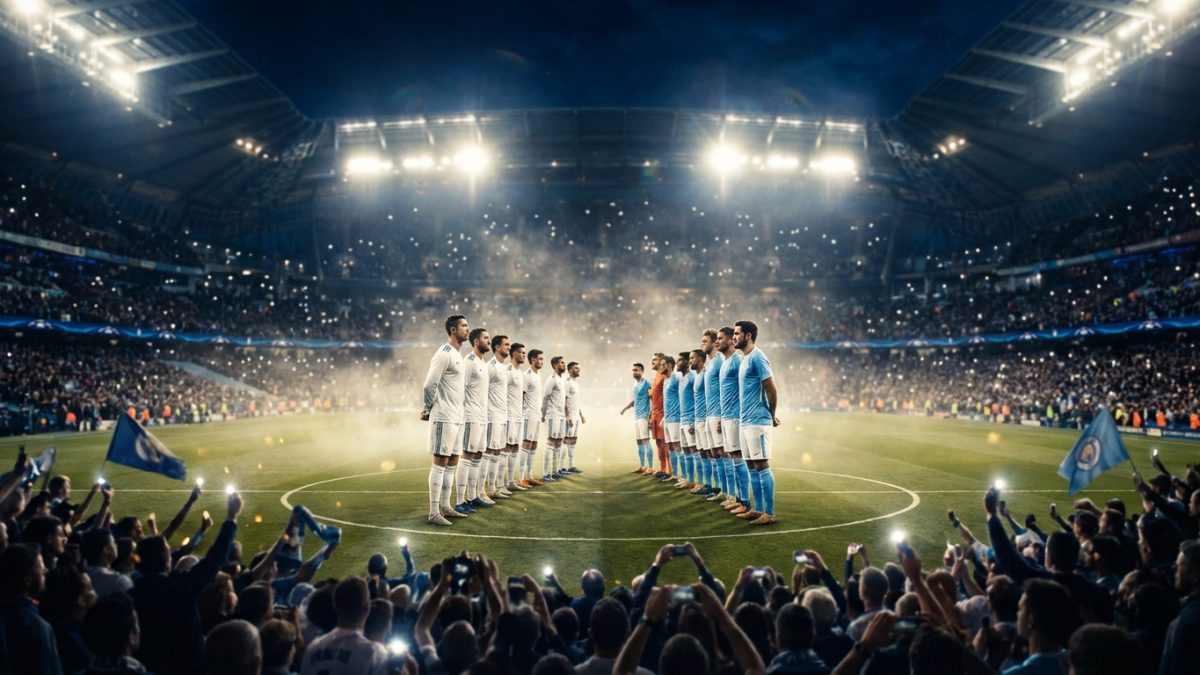
The Real Madrid Man City Champions League Round of 16 arrives loaded with its own historical weight. Three previous knockout meetings. Three exits for Guardiola. That pattern is specific enough to be worth examining carefully before the first whistle at the Bernabéu on March 11.
What Keeps Happening at the Bernabéu
In 2022 City led in stoppage time. Mahrez hit the post. Madrid scored twice in three minutes. The 2023 tie was the outlier — the year City won everything — but in every other encounter the script reasserts. Madrid absorb, then produce one decisive moment in a window that shouldn’t exist. Their defensive block doesn’t hold. It waits.
Guardiola’s pressing triggers depend on opponents committing to a pass in a specific zone. Madrid’s midfield has spent years learning not to give those triggers. Kroos plays first-touch balls into channels that bypass the press entirely. Modrić drifts to positions three seconds ahead of where City’s shape expects him. These are accumulated solutions built specifically against this opponent. Check the Champions League fixtures for the full bracket and second-leg dates.
What Changes on March 11
This City squad carries fewer psychological anchors to previous exits. Guardiola’s first-leg instruction will be conservative — do not chase the game, do not expose the wide channels, accept a 0-0 at the Bernabéu as almost a win. The problem is that Ancelotti will push for an early goal specifically to break that structure before it settles. The first fifteen minutes will be more tactically decisive than any other passage of play in either leg.
The team imposing their preferred match tempo in the opening twenty minutes sets the psychological architecture for everything that follows. Whether City finally solve this specific tie — or whether the Bernabéu produces its fourth knockout miracle — is the question the Champions League scores page will answer at full time on Tuesday.